

Multinational Corporate Presence Impact
How foreign corporations reshape Malaysia’s economy through employment creation, technology transfer, supply chain integration, and competitive dynamics in local markets.

Why Multinational Corporations Matter for Malaysia
Malaysia’s transformation into a middle-income nation didn’t happen by accident. Since the 1970s, multinational enterprises (MNEs) have become the driving force behind the country’s economic modernization. They’re not just investors — they’re catalysts that reshape entire industries, create jobs, and introduce technologies that wouldn’t otherwise reach the region.
The semiconductor giants like Intel and Penang’s electronics manufacturers brought industrial sophistication. The petrochemical complexes transformed Johor into an industrial hub. These corporations don’t operate in isolation. They’re embedded in Malaysia’s supply chains, competing with local businesses, training workers, and establishing the technical standards that shape how the entire economy functions.


Employment Creation and Skills Development
Direct employment numbers tell only part of the story. Malaysia’s electronics sector alone employs over 450,000 workers — many of them in multinational facilities. But it’s not just the job count that matters. MNEs establish wage standards that local companies often follow, pushing up compensation across entire industries.
The real impact happens in skills transfer. A technician working in a semiconductor fab isn’t just earning a salary. They’re learning precision manufacturing, quality control protocols, and troubleshooting methods that don’t exist in traditional sectors. When they eventually move to local suppliers or start their own businesses, they carry this knowledge forward. Companies like Penang Skills Development Center exist precisely because MNEs demonstrated the demand for specialized technical training.
That’s not comprehensive corporate benevolence — it’s practical necessity. Multinational corporations need skilled workers. When they can’t find them locally, they either import talent (expensive) or invest in training programs. Malaysia benefits from this self-interest.
Technology Transfer and Industrial Capability
Foreign corporations don’t hand over proprietary technology through formal agreements — that rarely happens. Instead, technology transfer occurs through spillovers. Engineers who trained at multinational facilities move to domestic companies. Equipment suppliers learn what advanced manufacturing requires. Industry associations adopt standards that MNEs use.
Consider Malaysia’s automotive sector. When major international manufacturers established assembly plants here, local suppliers had to upgrade their production capabilities dramatically. The country went from basic assembly to integrated supply chains within a generation. Vendors supplying Ford, Daimler-Benz, and Honda couldn’t survive using outdated methods — they had to modernize or lose contracts.
“Multinationals don’t just bring money. They bring standards, processes, and the expectation that things work a certain way. Local companies have to match that or disappear.”
This competitive pressure creates what economists call “dynamic efficiency.” It’s uncomfortable for established domestic businesses, but it forces innovation that benefits the entire economy. Companies that can’t compete with international standards typically serve protected domestic markets — a situation that’s ultimately unsustainable.

Supply Chain Integration and Regional Connectivity
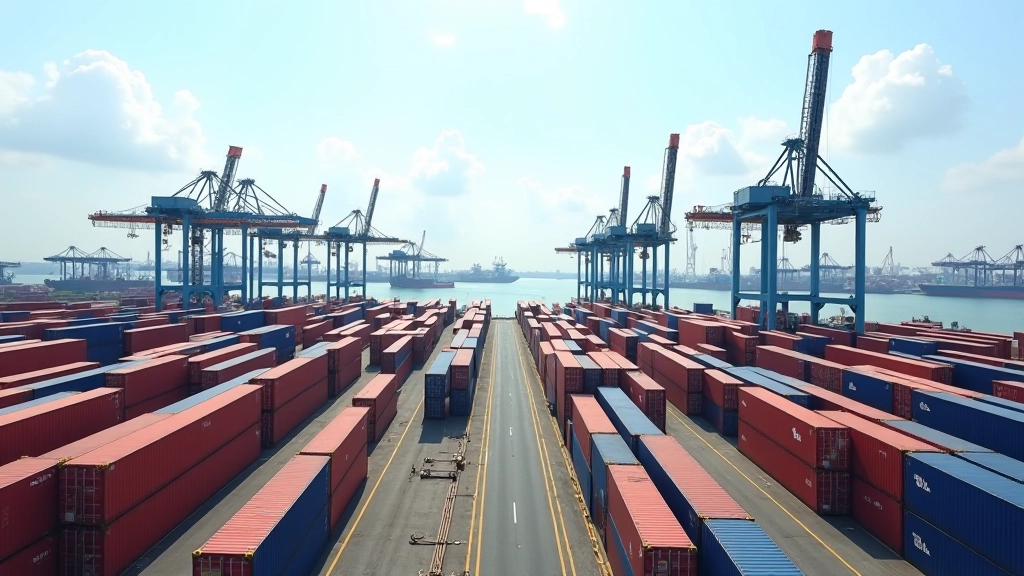
Malaysia isn’t just a destination for multinational investment — it’s become a node in complex global supply networks. Electronics manufacturers source components from local suppliers, assemble products in Malaysia, and export to Southeast Asia, Europe, and North America. This integration creates a web of economic relationships.
The logistics industry exists because of this. Port operations in Port Klang and Tanjung Pelepas handle millions of containers annually — much of it driven by multinational manufacturing and export requirements. Transportation, warehousing, customs clearance, financial services — entire sectors grow around these supply chains.
Local suppliers benefit directly. A component manufacturer that supplies Intel’s facilities gains access to world markets through that relationship. They’re no longer limited to domestic customers. But this comes with demands — quality standards, delivery reliability, cost competitiveness. Companies that meet these requirements thrive. Those that don’t face irrelevance.
Market Competition and Consumer Benefits
When foreign corporations enter a market, local incumbents face pressure they’ve never experienced. Established Malaysian companies that dominated their sectors suddenly compete with well-capitalized, technologically advanced international firms. It’s not always comfortable. Some fail. Others innovate and become stronger.
Consumers benefit immediately. Prices often fall as competition intensifies. Product quality improves. Service standards rise. The financial services sector transformed when international banks entered Malaysia — local banks had to modernize their systems, expand services, and improve customer experience just to remain relevant. That happened because foreign competition forced it.
This competitive dynamic extends to efficiency. Multinational corporations operate with different cost structures, management systems, and performance metrics than many domestic businesses. Their presence raises the bar for what constitutes acceptable performance across the entire economy. It’s uncomfortable but necessary for long-term competitiveness.

Challenges and Trade-offs
The multinational corporate presence isn’t uniformly positive. There are real costs and genuine concerns. Profit repatriation means earnings generated in Malaysia flow back to foreign shareholders. Environmental standards are sometimes lower than in parent company home countries. Labor practices in some sectors have attracted criticism. Resource extraction industries bring particular concerns about sustainability.
Dependency represents another challenge. When your economy relies heavily on multinational investment, you’re vulnerable to global market shifts and corporate decisions made in distant headquarters. A decision by a semiconductor manufacturer to consolidate production elsewhere can devastate a regional economy. Malaysia experienced this during manufacturing relocations to lower-cost countries in the 2000s.
Local businesses sometimes struggle to compete with multinational advantages — access to capital, global brand recognition, established distribution networks. The goal isn’t to exclude foreign investment but to ensure domestic enterprises can develop competitive capabilities alongside it. That requires deliberate policy and substantial local investment in education and infrastructure.
The Path Forward: Balancing Growth with Sovereignty
Malaysia’s experience shows that multinational corporate presence isn’t a simple benefit or burden — it’s a complex relationship with genuine advantages and real challenges. The country has leveraged foreign investment to industrialize, create jobs, and integrate into global value chains. That’s measurable progress.
But sustainability requires more than welcoming investment. It requires developing local capacity so Malaysian companies can compete effectively. It requires environmental standards that protect long-term resources. It requires labor protections that ensure workers benefit from growth. These aren’t anti-business positions — they’re the conditions for stable, equitable economic development.
The most successful approach treats multinationals as partners in development, not saviors. Foreign corporations bring capital, technology, and market access. Local governments and businesses must ensure these benefits extend beyond the corporate gates into broader economic development. That’s the real measure of multinational impact — not just the jobs created in their facilities, but the capabilities developed, the industries strengthened, and the economy transformed.
Related Articles

Informational Disclaimer
This article provides educational information about multinational corporate presence and foreign direct investment in Malaysia. The analysis reflects economic trends, published data, and documented case studies. However, economic impacts vary by sector, region, and time period. Individual circumstances differ significantly. For specific investment decisions, policy recommendations, or business strategy, consult with qualified economists, investment advisors, or business development professionals. This content is informational only and shouldn’t be interpreted as economic advice or policy guidance.